Is the Dog Park Actually Doing More Harm Than Good? Here's What Trainers and Vets Want You to Know
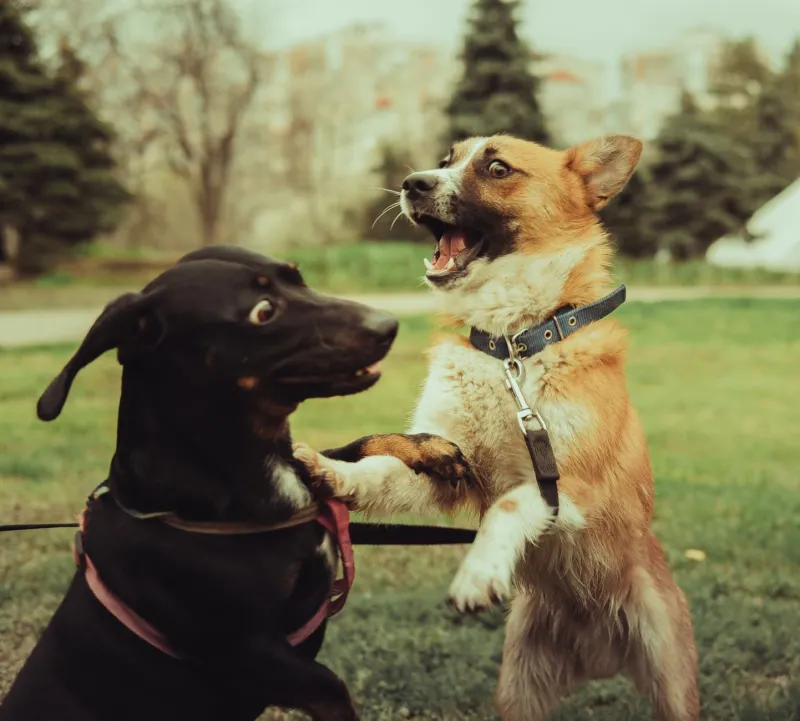
There's something undeniably feel-good about watching dogs sprint across an open field, tails spinning like little propellers. Dog parks have become a staple of American pet culture — you'll find them tucked into city neighborhoods, suburban green spaces, and just about everywhere in between. For a lot of us, loading up the car and heading to the local off-leash area feels like the responsible, loving thing to do.
But what if it's not always the best call?
I'll be honest — I used to be a dog park devotee. Lisi would bolt through the gate and I'd feel like the world's greatest dog mom. Then came the incident. A seemingly friendly Lab mix zeroed in on Lisi's ball, a scuffle broke out in about three seconds flat, and we left shaken, with a small but scary bite wound on her ear. That afternoon sent me down a rabbit hole of research, and what I found made me rethink the whole thing.
Spoiler: I wasn't alone.
The Problem With Unstructured Off-Leash Play
Here's the thing about dog parks that nobody really talks about at the gate: the environment is almost entirely uncontrolled. You've got dogs of wildly different ages, sizes, play styles, and socialization histories all thrown together with zero structure. For some dogs, that's fine. For a lot of others, it's genuinely overwhelming.
Certified professional dog trainer Dana Wilkes, who works with reactive dogs in the Pacific Northwest, puts it plainly: "Off-leash dog parks are one of the most common places I see trauma originate. A dog gets rushed by three dogs at once, gets pinned, and the owner thinks it was just roughhousing. But that dog learned something that day — that other dogs are unpredictable and scary. Undoing that takes months."
The issue isn't that dogs shouldn't socialize. They absolutely should. The issue is that unstructured chaos isn't the same thing as healthy socialization. Puppies especially can pick up bad habits fast when older, pushy dogs model bullying behavior — and the learning sticks.
Resource Guarding: The Trigger Nobody Sees Coming
Bring a tennis ball to a dog park. Go ahead, I dare you.
Resource guarding — when a dog becomes possessive over food, toys, or even a favorite human — is one of the most common behavioral issues that flares up in dog park settings. And it can escalate shockingly fast. One moment two dogs are sniffing the same stick, and the next someone's dog is getting stitches.
Reader Melissa T. from Austin, Texas, shared her experience with us: "My golden, Biscuit, was the sweetest dog at home. First time at the dog park, another dog went for his rope toy and Biscuit snapped. I had no idea he even had a guarding tendency. We never went back, and we started working with a trainer instead. Turns out a lot of dogs have thresholds that just never get triggered in normal life."
This is incredibly common. Dogs that seem perfectly even-tempered in everyday life can hit a wall when overstimulated, cornered, or competing for resources. And in a park full of strangers' dogs, you simply cannot predict or control the variables.
The Disease and Parasite Factor
Okay, let's talk about the stuff that makes vets cringe every time a client says "we go to the dog park every weekend."
Dr. Priya Nair, a small animal veterinarian practicing in the Chicago area, is candid about the health risks: "Kennel cough, canine influenza, giardia, ringworm, parvovirus in areas with low vaccine rates — dog parks are transmission hotspots. You have no idea if the dogs around yours are current on vaccines, whether they're showing early signs of illness, or whether they've been treated for parasites recently."
Giardia alone is rampant in shared outdoor spaces because it spreads through contaminated soil and water. Even a well-maintained park with regular cleanup can harbor it. And let's be real — not every park is well-maintained. Shared water bowls are a particularly easy transmission route that a lot of owners don't think twice about.
So What Actually Works?
Here's the good news: you have options, and some of them are genuinely better for your dog's long-term social health than a crowded off-leash free-for-all.
Structured playdates with known dogs. Find one or two dogs whose temperaments and play styles match your pup's, and set up regular one-on-one time. This gives your dog real social experience without the overwhelming variables. Your neighbor's chill beagle might be your dog's best social teacher.
Sniff walks. A slow, exploratory walk where your dog gets to sniff everything they want is genuinely enriching and socially stimulating — even without direct dog-to-dog interaction. Dogs gather an enormous amount of social information through scent alone.
Puppy classes and training groups. Enrolling in a group obedience class or a well-run puppy kindergarten puts your dog in contact with other dogs in a controlled, trainer-supervised environment. These sessions are structured to build confidence, not chaos.
Doggy daycare — selectively. A good daycare facility will temperament-test dogs before admission and keep groups manageable. If you're going this route, visit in person, ask about staff-to-dog ratios, and check how they handle conflicts. Not all daycares are created equal.
Hire a professional for socialization guidance. If you're working with a dog that has any reactivity, fearfulness, or history of negative dog-to-dog encounters, a certified trainer (look for CPDT-KA credentials) can build a socialization plan that actually fits your individual dog.
When Dog Parks Are Fine — And When They're Not
Look, I'm not here to be the person who says dog parks are universally evil. Some dogs genuinely thrive in that environment — typically confident, well-socialized adult dogs with solid bite inhibition and easy-going temperaments. If that's your dog, and you're vigilant about what's happening around you, go have fun.
But if your dog is a puppy still forming their worldview, a senior dog with lower tolerance for chaos, a dog with any history of anxiety or reactivity, or a recently adopted rescue who's still figuring out their place in the world — the dog park might be the wrong tool for the job right now.
The goal has never been to get your dog to a dog park. The goal is a happy, confident, socially healthy dog. And sometimes the path there looks a lot quieter than we expected.
Lisi and I still get out plenty. We just do it differently now — long sniff walks, playdates with her two best dog friends, and the occasional group training class. Her tail wags just as hard. Maybe harder, honestly.
And her ears? Both perfectly intact.