Why Does My Dog Suddenly Go Crazy at Night? The Zoomies Explained

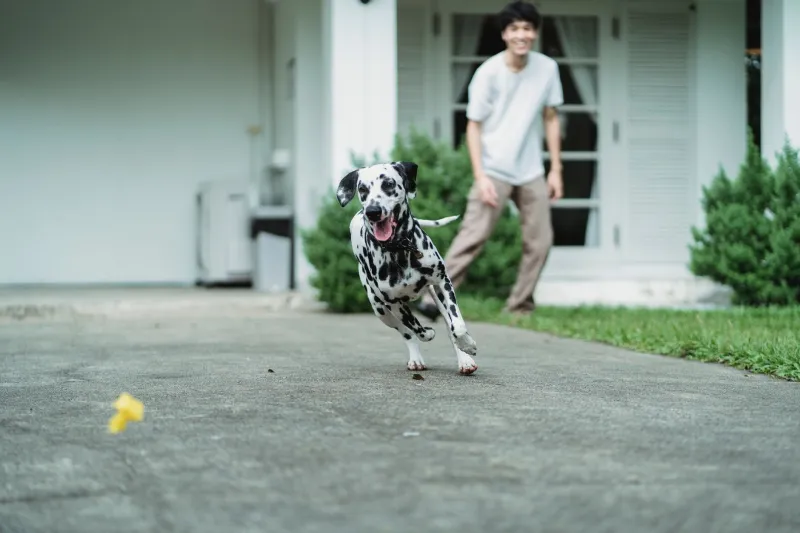
It's 10:47 PM. You've dimmed the lights, put on something mindless to watch, and you're approximately four minutes from falling asleep on the couch. Then it happens. Your dog launches off the armchair like a golden retriever-shaped missile and begins doing laps around the coffee table at a speed that seems physically impossible for a living creature.
Welcome to the zoomies.
If you've owned a dog for more than a few weeks, you already know exactly what this looks like. The butt tucked low, the wild eyes, the absolute refusal to slow down no matter how many times you say their name. It's chaotic, it's hilarious, and at 11 PM, it's also a little bit exhausting.
But what actually causes this? And more importantly — is there anything you can do about it?
What Veterinary Behaviorists Call It (And Why It Makes Perfect Sense)
The technical term for zoomies is Frenetic Random Activity Periods, or FRAPs. That name alone should tell you something: this is a recognized, documented behavior, not a sign that your dog has lost their mind.
According to veterinary behaviorists, FRAPs are a completely normal way for dogs to release pent-up physical and emotional energy. Think of it like a pressure valve. Dogs accumulate tension throughout the day — from stimulation, from holding still, from interacting with people and other animals — and at some point, that energy needs somewhere to go. The zoomies are that somewhere.
The timing isn't random, either. Most dog owners report that zoomies happen most frequently in the evening, and there's good reason for that. Dogs are crepuscular by nature, meaning they're naturally more active around dawn and dusk. That 9 or 10 PM burst of energy? It's partly just biology doing its thing.
The Four Most Common Triggers
While the zoomies themselves are normal, certain things make them more intense, more frequent, or longer-lasting. Here's what's usually behind them:
Not enough physical exercise. This is the big one. A dog who hasn't had adequate physical activity during the day has a tank full of unspent energy, and it will come out eventually. Evening zoomies in under-exercised dogs tend to be longer and more intense.
Overstimulation. Counterintuitive, right? But a dog who has been around a lot of people, noise, or activity — like at a family gathering or after a trip to a busy park — can actually be more prone to zoomies, not less. Their nervous system has been running hot all day, and the zoomies are how they decompress.
Post-bath chaos. Ask any dog owner about post-bath zoomies and you'll get a knowing laugh. There's no definitive scientific explanation for why a fresh bath sends dogs into overdrive, but theories include relief at being done, an attempt to dry off, or simply a reaction to the strange smells of shampoo.
Boredom and under-stimulation. On the opposite end of the spectrum, a dog who has been alone and inactive for most of the day may also zoom — not from excess physical energy, but from mental restlessness. Mental stimulation matters just as much as physical exercise.
Real Talk from Real Dog Owners
Jennifer, a dog mom from Austin, Texas, has a three-year-old border collie mix named Biscuit who used to launch into full-blown zoomie sessions every single evening around 9 PM. "I thought something was wrong with him at first," she says. "He'd just go absolutely feral for like ten minutes and then pass out cold."
After talking to her vet, Jennifer added a 20-minute puzzle feeder session to Biscuit's evening routine. "The zoomies didn't stop completely, but they got shorter and way less intense. He was just bored out of his mind."
Marcus, a first-time dog owner from Chicago with a one-year-old lab named Pretzel, had a different experience. "Pretzel would zoom right after I got home from work every day. My trainer told me to stop greeting him the second I walked in — just ignore him for five minutes until he calmed down. It actually helped a lot."
When Zoomies Might Signal Something More
In the vast majority of cases, zoomies are completely harmless. But there are a few situations where frantic behavior at night could indicate something worth discussing with your vet.
If your dog's zoomies are accompanied by whining, excessive panting, or seem distressed rather than playful, it's worth a check-in. Sudden changes in behavior — especially in older dogs — can sometimes point to pain, cognitive changes, or thyroid issues. And if the episodes seem to happen at very specific times in a way that looks more like a compulsion than play, a veterinary behaviorist can help rule out anxiety-related disorders.
For most healthy dogs, though? The zoomies are just the zoomies.
How to Handle the Late-Night Chaos
You probably can't eliminate zoomies entirely, and honestly, you probably don't want to — they're usually a sign of a happy, healthy dog. But you can manage them in ways that work better for your household.
Increase structured exercise earlier in the day. A longer walk or a solid play session in the late afternoon can take the edge off evening zoomies. The goal is to give that energy somewhere productive to go before bedtime approaches.
Build in a wind-down routine. Dogs respond well to predictable rhythms. A calm evening routine — a shorter leash walk, a chew toy, some quiet time — signals to your dog that the day is winding down. Over time, their body clock adjusts.
Create a safe zoom zone. If your dog is going to zoom regardless, make sure the space is safe. Clear away anything breakable, block off stairs, and if you have hardwood floors, consider a rug to give them better traction. Outdoor zoomies in a fenced yard are ideal when possible.
Don't chase or escalate. It's tempting to run around with them — and sometimes that's genuinely fun — but if you're trying to wind things down, chasing your dog during zoomies sends the opposite message. Stay calm, move slowly, and let the episode run its course.
Try mental enrichment. Sniff mats, lick mats, puzzle feeders, and training sessions are surprisingly effective at tiring dogs out. A dog who has had to think during the day is often a calmer dog at night.
The Bottom Line
The midnight zoomies aren't a problem to be solved so much as a behavior to be understood. Your dog isn't misbehaving — they're doing exactly what their body is telling them to do. Once you know what's driving the energy, you can meet them where they are and set up a routine that works for both of you.
And on the nights when Pretzel or Biscuit or your own dog goes absolutely feral at 10:45 PM? Sometimes the best thing you can do is get out of the way, laugh a little, and appreciate the fact that you share your life with a creature who finds that much joy in just running.