That Wagging Tail Isn't Always a Happy One — What Your Dog Is Really Saying
We've all done it. A dog trots over, tail going like a helicopter blade, and we immediately assume: happy dog, safe to pet, all good. And sometimes that's completely true. But sometimes? That same wagging tail is telling a very different story — and if you're not paying attention to the details, you might be missing the whole conversation.
Dogs are incredibly expressive animals, and the tail is basically their emotional antenna. The problem is most of us were taught a one-size-fits-all rule: wag equals happy. In reality, tail communication is layered, context-dependent, and surprisingly nuanced. Let's break it all the way down.
It's Not Just About Whether the Tail Is Moving
Before we get into specific positions and patterns, here's the most important thing to understand: a wagging tail signals emotional arousal, not necessarily happiness. Your dog's tail moves when they're excited, yes — but also when they're anxious, overstimulated, or even feeling aggressive. The wag is the headline. The position, speed, and direction are the actual story.
Think of it like this: a person's voice going loud doesn't always mean they're thrilled. It might mean they're angry, or scared, or just really into a football game. Same energy.
High and Stiff: Confidence (or a Warning)
When your dog holds their tail high — above the level of their back — they're projecting confidence. In a relaxed setting, like greeting a familiar person or strutting into the backyard they own, this reads as self-assurance and alertness. Your dog feels in control of the situation.
But here's where it gets important: if that high tail is also stiff, with short, rapid movements rather than a loose sweep, it can signal tension or even a threat display. Dogs that are posturing — especially around other dogs or unfamiliar people — often carry their tails this way. It's confidence tipped into dominance or defensiveness. Not necessarily dangerous on its own, but definitely worth noticing before the situation escalates.
Low and Slow: Uncertainty or Submission
A tail tucked low, or even curled under the belly, is one of the clearer signals in the dog communication playbook. This is a dog who feels uncertain, submissive, or genuinely frightened. You'll see it at the vet, during thunderstorms, when a dog is being scolded, or when they're meeting someone who makes them uncomfortable.
A slow, low wag — where the tail barely moves and stays near the hindquarters — often signals appeasement. Your dog is essentially saying, I'm not a threat, please don't come at me. It's not happiness. It's de-escalation.
If you see this and keep pushing a dog to interact (or let your kid rush over to pet them), you're ignoring a polite request to back off. Dogs who feel like their signals aren't being heard sometimes escalate to make the point clearer.
The Loose, Mid-Level Wag: That's the Happy One
Okay, here's your genuinely good sign. A tail held at roughly back level — not ramrod high, not tucked low — with a loose, relaxed sweep from side to side? That's contentment. That's the wag of a dog who feels comfortable, safe, and glad to be wherever they are.
This is what you're looking for when you come home, when your dog greets a friend they like, or when they're settling in for a walk they're excited about. Bonus points if the whole back half of their body is wiggling with it. That's full-body joy, and it's one of the best sights in the world.
Direction Actually Matters — And This One Will Surprise You
Researchers at the University of Trento in Italy found something genuinely fascinating: the direction a dog wags their tail carries meaning, and other dogs pick up on it instinctively.
Wagging more to the right side (from the dog's perspective) tends to be associated with positive emotions and approach behavior — like seeing their owner or something they're drawn to. Wagging more to the left is linked to withdrawal and negative emotional states, like encountering something threatening or unfamiliar.
You probably can't clock this with the naked eye in real time, but it's a reminder that your dog's communication system is way more sophisticated than we give it credit for. And other dogs? They absolutely notice.
Speed: Fast Isn't Always Festive
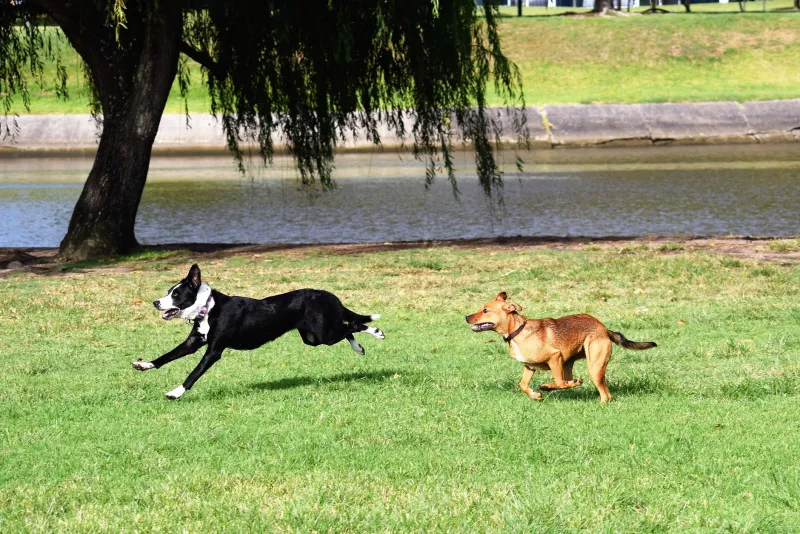
A fast wag tends to reflect high arousal — but again, arousal isn't the same as happiness. A dog who's wildly excited to see you is highly aroused in a great way. A dog who's overstimulated at a chaotic dog park, or who's been pushed past their comfort zone, might also have a fast-moving tail — but the rest of their body will tell you something's off.
Look for stiff posture, a hard mouth, whale eye (the whites of the eyes showing), or ears pinned back alongside that fast wag. Those are signs that the arousal is tipping into stress, not excitement. Slow down, create some space, and let your dog decompress.
Reading the Whole Dog, Not Just the Tail
Here's the thing about tail language: it's never meant to be read in isolation. Your dog's ears, eyes, mouth, posture, and even their breathing are all part of the same broadcast. The tail is a piece of the puzzle — an important one — but you need the full picture.
A dog with a high tail, relaxed ears, soft eyes, and a wiggly body? Confident and happy. A dog with a high stiff tail, forward-pinned ears, hard stare, and tight body? That's a different conversation entirely, and one you want to respect.
Take time to watch your own dog in different situations — at home, on walks, at the dog park, at the vet. You'll start to see their personal baseline, which makes it so much easier to notice when something's off.
Why This Stuff Actually Matters
Understanding tail language isn't just a fun party trick for dog nerds. It genuinely changes how you interact with your dog — and with dogs you encounter out in the world. It's how you catch stress before it becomes a meltdown. It's how you know when your dog is actually okay with meeting that new person versus just tolerating it. It's how you advocate for your dog when they can't advocate for themselves.
And honestly? Once you start seeing it, you can't unsee it. Every dog you meet becomes a little more readable, a little more understood. That's a pretty good deal for both of you.
Your dog is talking to you constantly. The tail is just one channel — but it's a loud one, if you know how to listen.