Not Every Dog Needs a Best Friend — Reading the Signs Your Pup Is Done Socializing
The Myth of the Socially Obligated Dog
Somewhere along the way, dog culture in the US latched onto this idea that socialization equals happiness. Dog parks, doggy daycare, puppy playdates — if your dog isn't doing all of it, you might start wondering if you're failing them somehow.
Here's the thing nobody tells you at the adoption event: not all dogs are wired for canine companionship. Some genuinely love the company of other dogs. Others tolerate it. And a surprising number would honestly rather just hang out with you.
None of those outcomes mean your dog has a problem. But learning to tell the difference? That's where things get interesting.
What "Friendly" Actually Looks Like
Before you can recognize discomfort, it helps to know what genuine dog-to-dog enthusiasm actually looks like.
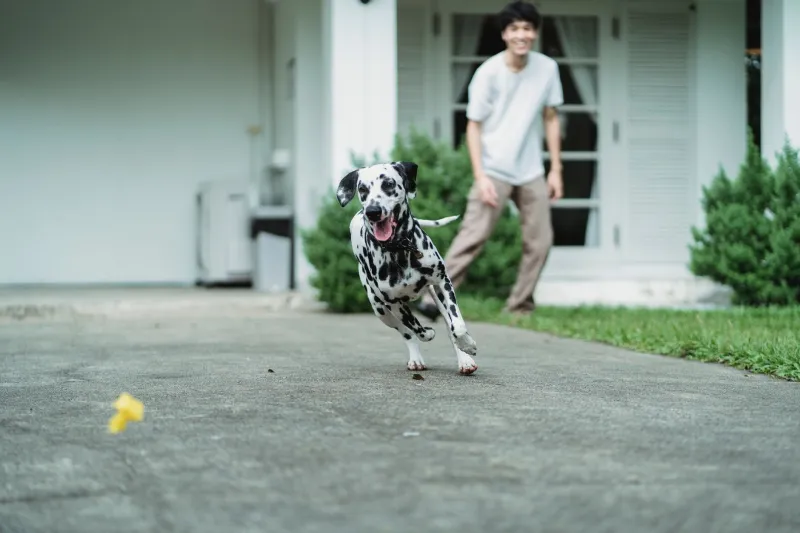
A dog who's truly happy to meet another dog will typically approach in a loose, wiggly way — think bouncy, curved body rather than stiff and straight. Their tail wags in a wide, relaxed sweep (not a tight, fast flicker). They might do a quick play bow, dropping their front end low while their rear stays up. After a brief sniff greeting, they're ready to move, chase, or just hang side by side.
That's the whole-body "yes." It's pretty hard to miss once you know what you're looking for.
The Signals Most Owners Miss
The tricky part is that dogs who are uncomfortable don't always growl or snap — at least not right away. Most dogs communicate their discomfort in much quieter ways, and those signals are easy to overlook if you're not paying attention.
Watch for these:
Lip licking and yawning. Not because they're sleepy or just ate. In a social context, these are classic stress signals. If your dog keeps licking their lips or yawning every time another dog approaches, they're telling you something.
Whale eye. This is when you can see the whites of your dog's eyes — usually because they're turning their head away while keeping their gaze fixed on whatever's stressing them out. It's a look that says "I see you and I don't love this."
Tucked tail or stiff tail. A tail tucked under the belly is obvious fear. But a tail held very high and vibrating in short, rapid wags? That's not excitement — that's tension. The slow, loose wag is the friendly one.
Freezing. When a dog goes suddenly still during an interaction, that's often the calm before the storm. It's a warning sign, not a sign that everything's fine.
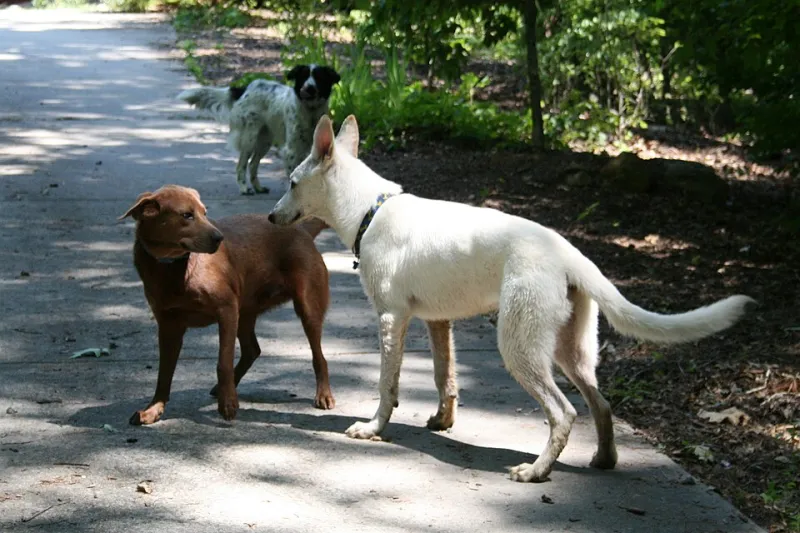
The lean-away or turn-away. Some dogs will physically try to put distance between themselves and another dog — leaning into your legs, turning their body, or trying to move away. If your dog is consistently trying to leave the situation, honor that.
When Pushing Socialization Makes Sense (And When It Doesn't)
Socialization is genuinely important — especially in puppyhood. Exposing young dogs to a variety of other dogs, people, sounds, and environments helps build a confident, adaptable adult dog. That part is real.
But there's a difference between healthy socialization and forcing your adult dog into situations that make them miserable in the name of "being social."
If your dog is a puppy or a young adult still building their social skills, gentle, positive exposure to calm, well-mannered dogs absolutely makes sense. Keep sessions short, watch their body language closely, and end on a good note before things escalate.
If, on the other hand, you have an adult dog who has consistently shown you they don't enjoy dog-to-dog interactions — who shuts down, stiffens up, or tries to escape every single time — pushing more socialization isn't going to flip a switch. You're more likely to increase their anxiety than change their personality.
Some dogs had early experiences (or a lack of early experiences) that shaped how they feel about other dogs, and that's not always something you can fully undo through exposure alone. A certified professional dog trainer or veterinary behaviorist can help you figure out whether what you're dealing with is a manageable quirk or something that needs more structured support.
The Dog Who Just Prefers People
Let's talk about this one, because it deserves its own moment.
There are dogs who are genuinely, deeply bonded to their humans and simply not that interested in other dogs. They light up for you. They're curious about people at the coffee shop, thrilled to meet your friends, ready to follow you anywhere. But put another dog in the mix and they're... over it. Maybe a little anxious. Maybe just indifferent.
This is not a failure. This is a dog telling you exactly who they are.
Certain breeds are actually more predisposed to this kind of human-focused temperament — many herding and working breeds, for example, tend to bond intensely with their people and can be selective about canine company. But personality varies wildly within breeds too, and individual history plays a huge role.
If your dog is happy, healthy, and thriving in their relationship with you and your household, they do not need a dog best friend to complete the picture. That's a human projection, not a dog need.
Letting Go of the Guilt
Here's where I want to be honest with you: a lot of the pressure dog owners feel around socialization comes from comparison. You see the Golden Retriever at the park who loves absolutely everyone, and you wonder why your dog isn't like that.
But dogs — like people — have personalities. Some are the life of the party. Some are perfectly content with a small, trusted circle. Some just want to go home.
Your job isn't to make your dog into the most social dog on the block. Your job is to understand who your dog actually is and set them up to thrive in that reality. That might mean skipping the dog park entirely and finding enrichment in other ways — solo hikes, sniff walks, training sessions, backyard play. It might mean carefully choosing one calm dog friend rather than throwing your pup into a chaotic group setting.
Watching your dog's body language isn't just a training skill. It's how you learn to listen to them. And when you start listening, the guilt usually fades — because you're no longer measuring your dog against an imaginary standard. You're just getting to know them.
And honestly? That's the best part of this whole dog life thing.