Why Your Chill Dog Falls Apart at the Vet (And How to Actually Fix It)
Lisi has seen it. I've seen it. Pretty much every dog owner has seen it at some point: the dog who greets strangers with a wagging tail, plays nicely at the park, and sleeps like a log through thunderstorms — but the moment that vet clinic door swings open, transforms into a trembling, panting, floor-hugging mess.
It's confusing. It's stressful. And honestly, it can make you dread those appointments almost as much as your dog does.
But here's the thing — your dog isn't being dramatic, and this isn't just a personality quirk you have to white-knuckle through forever. Veterinary anxiety is a recognized behavioral issue, and there are real, practical ways to make those visits a whole lot easier on everyone involved.
What's Actually Going On in Your Dog's Head
Dogs experience the world primarily through smell, and veterinary clinics are a sensory overload of the worst kind — from their perspective, anyway. The sharp scent of antiseptics, the lingering stress pheromones left behind by anxious animals before them, the unfamiliar sounds of equipment, and the memory of previous handling that might have been uncomfortable — it all adds up fast.
Veterinarians often refer to this as "anticipatory anxiety." Your dog isn't reacting to what's happening right now; they're reacting to what their brain has learned will happen. If every single trip to the vet has ended with being poked, prodded, or restrained, the whole experience — the car ride, the waiting room, even your own nervous energy — becomes a trigger.
And yes, your energy matters more than you might think. Dogs are remarkably good at reading human body language and stress hormones. If you're tense walking into that clinic, your dog picks up on it. You're essentially confirming their suspicion that something bad is about to go down.
The Problem With Just "Pushing Through It"
A lot of well-meaning owners figure that if they just keep bringing the dog in, eventually the anxiety will fade. Unfortunately, that's not usually how it works. Without intentional intervention, repeated stressful experiences can actually reinforce the fear response, making it worse over time — not better.
Beyond the emotional toll, there's a real health consequence here too. A dog in full panic mode is harder to examine accurately. Heart rates spike, muscles tense, and behaviors emerge that don't reflect the dog's normal baseline. Vets are doing their best, but a terrified patient makes their job significantly harder — and can sometimes lead to incomplete exams.
Desensitization: The Long Game That's Worth Playing
The gold-standard approach recommended by veterinary behaviorists is gradual desensitization — essentially, teaching your dog's nervous system that vet-related things are no big deal, or even kind of great.
The key word there is gradual. You're not going to fix this in one session. But a few weeks of consistent, low-pressure practice can make a real difference.
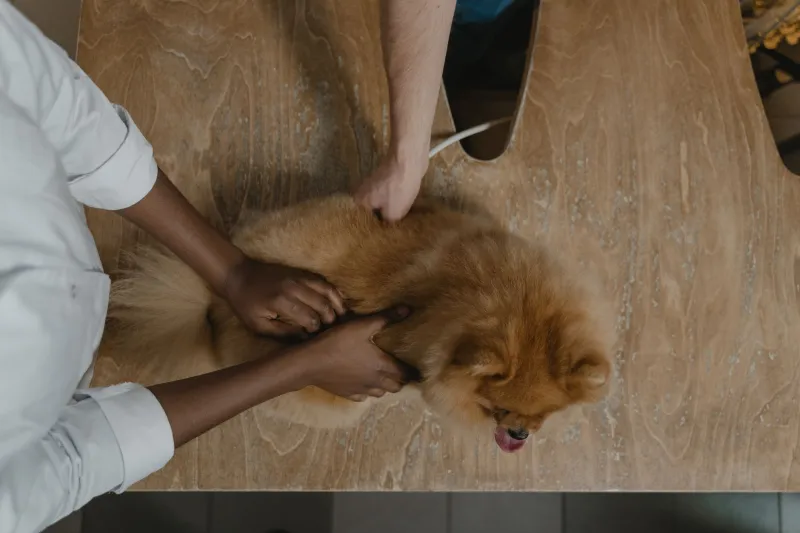
Start at home. Get your dog comfortable with the types of handling that happen at the vet. Gently lift their lips to look at their teeth. Handle their paws and press lightly on their nails. Run your hands along their sides, under their belly, and around their ears. Do this regularly, pairing every touch with a high-value treat. The goal is to build a positive association with being handled — before there's any clinic stress layered on top.
Make the car ride neutral (or fun). For many dogs, the anxiety starts the moment they realize they're heading somewhere unfamiliar. Take short, purposeless car trips — to the drive-through, to a friend's house, or just around the block — so that getting in the car doesn't automatically signal "vet."
Visit the clinic without an appointment. This one's a game-changer. Call your vet's office and ask if you can stop by during a slow time just to let your dog sniff around the waiting room, get some treats from the front desk staff, and leave. No exam. No stress. Just a neutral — or ideally positive — experience in that space. Many clinics are happy to accommodate this, especially if you explain what you're working on.
What to Ask Your Vet About
Your veterinarian is your biggest ally here, and it's worth having an honest conversation with them about your dog's anxiety before the next appointment.
Many clinics now offer what's called Fear Free certified care — an approach developed specifically to reduce patient stress through modified handling techniques, calming environments, and pacing exams differently. If your vet's office isn't Fear Free certified, ask if they're familiar with low-stress handling techniques. Most modern practices are.
You can also ask about pre-visit medications. For dogs with significant anxiety, a mild anti-anxiety medication given an hour or two before the appointment can take the edge off enough to make the visit manageable. This isn't a permanent solution or a sign of failure — it's a practical tool that protects your dog's wellbeing and makes it easier to build positive experiences over time.
Some vets also suggest scheduling appointments at off-peak hours — early morning or late afternoon on weekdays tend to be quieter. Less chaos in the waiting room means less stress before the exam even begins.
Little Things That Add Up
Beyond the bigger strategies, a few small adjustments can make a surprising difference:
- Skip the meal before the appointment. A slightly hungry dog is usually more motivated by treats, which gives you more leverage for positive reinforcement during the visit.
- Bring their favorite high-value treats — not just regular kibble. Think small pieces of chicken, cheese, or whatever makes your dog's eyes light up.
- Stay calm yourself. Easier said than done, but taking a few deep breaths before you walk in genuinely helps. Your dog is watching you.
- Advocate for your dog in the exam room. If your dog needs a moment to sniff the table before jumping up, say so. If they're doing better on the floor, mention it. Good vets welcome this kind of communication.
It Gets Better — Really
Veterinary anxiety isn't a life sentence. With patience, consistency, and a little help from your vet, most dogs can learn that the clinic isn't the terrifying place their nervous system has decided it is. Some even get to the point of walking in with a wagging tail — though that might take a while, and that's completely okay.
The goal isn't a perfectly zen vet visit. The goal is a dog who can get the care they need without suffering through it. And that's absolutely worth working toward.