Your Dog Is Reading Your Mood Right Now — And It's Affecting Them More Than You Think
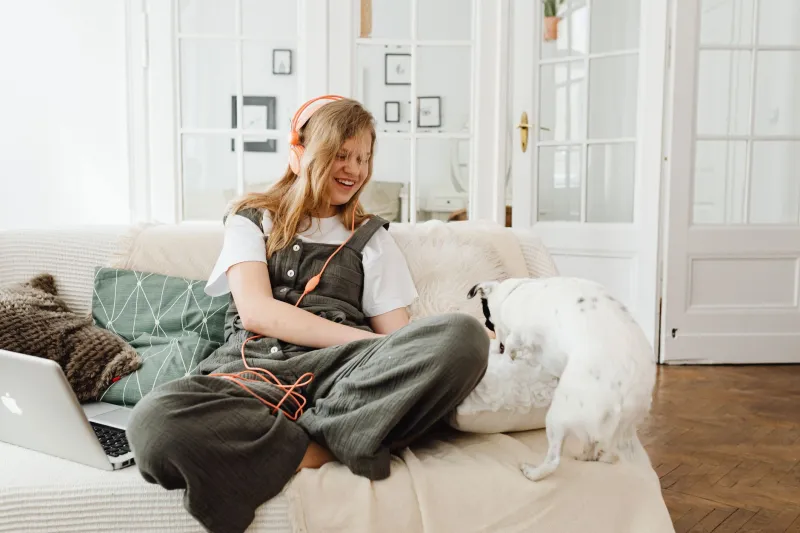
You've probably noticed it before. You come home after a brutal day at work — traffic was a nightmare, your inbox exploded, and you're running on fumes — and your dog is suddenly velcroed to your side, pacing, or acting a little... off. You chalk it up to coincidence. But it isn't.
Your dog knows. And not in a vague, fuzzy "dogs are intuitive" kind of way. In a real, documented, physiological kind of way.
The Science Is Kind of Wild
Researchers have been digging into the human-dog stress connection for years, and what they've found is genuinely fascinating. A study published in Scientific Reports found that dogs can actually detect changes in human cortisol — the primary stress hormone — through scent alone. We're talking about your dog sniffing out your anxiety before you've even said a word or changed your expression.
Beyond scent, dogs are expert readers of body language. They've spent roughly 15,000 years co-evolving with humans, which has made them remarkably tuned in to our posture, facial expressions, tone of voice, and even heart rate. Some research suggests dogs synchronize their own cortisol levels with their owners over time — meaning a chronically stressed person can end up with a chronically stressed dog, almost by osmosis.
That's not a metaphor. That's biology.
What It Actually Looks Like in Real Life
Here's where it gets personal. Think about the last time you were anxious about something — maybe a health scare, a job situation, a rough patch in a relationship. Did your dog start barking more? Become clingier than usual? Maybe they started having accidents indoors again, or picked up a new chewing habit?
These aren't random. Dogs experiencing secondhand stress often show it through:
- Increased reactivity — barking at things they normally ignore
- Destructive behavior — chewing, digging, or shredding
- Separation anxiety flare-ups — even in dogs who were previously fine alone
- Changes in appetite — eating less or suddenly becoming food-obsessed
- Hypervigilance — following you from room to room, unable to settle
The tricky part? When your dog starts acting out because of your stress, it often creates more stress for you. You get frustrated. You raise your voice. You become tense on walks. Your dog picks up on all of it, and the whole cycle spirals.
It's one of the most common — and least talked about — patterns in dog behavior.
The Anxious Owner Effect
Trainers see this constantly. An owner comes in convinced their dog has a serious behavioral problem — leash reactivity, aggression, anxiety — and after spending some time with both of them, it becomes clear that the dog is largely mirroring the human.
Picture this: a person who's nervous about their dog reacting on leash starts tensing up the moment another dog appears in the distance. They shorten the leash, hold their breath, and brace for impact. The dog feels the leash go tight, senses the owner's body stiffen, and thinks: something must be wrong. Cue the barking.
The dog wasn't the problem. The anticipatory anxiety was.
This isn't about blame — it's about awareness. Most of us don't realize how loudly our bodies are broadcasting our emotional state to an animal that has literally evolved to read us.
What You Can Actually Do About It
The good news: small shifts in your own stress management can have a surprisingly big effect on your dog's behavior and quality of life. Here's where to start.
Slow Down Before You Interact
Before you reach for the leash, before you walk through the door after a hard day, take thirty seconds. Breathe. Let your shoulders drop. Dogs notice the transition when you shift from frantic to calm — and they respond to it almost immediately.
Check Your Leash Grip
Seriously. If you're holding that leash like it's the only thing standing between you and disaster, your dog knows. Practice walking with a loose leash even when you're nervous. It sounds overly simple, but it's one of the fastest ways to interrupt the anxiety feedback loop on walks.
Create Routines That Calm Both of You
Dogs thrive on predictability, and so do stressed humans. A consistent morning walk, a regular feeding schedule, a wind-down routine at night — these rituals are grounding for your dog and genuinely therapeutic for you. It's a rare win-win.
Use Your Dog as a Mindfulness Anchor
Instead of letting your stress bleed into your time with your dog, try flipping it. When you feel overwhelmed, sit with your dog. Pet them slowly and deliberately. Focus on the warmth of their coat, the rhythm of their breathing. Research on the human-animal bond consistently shows that calm, intentional interaction with a dog lowers cortisol and blood pressure. Your dog gets comfort, and so do you.
Don't Ignore Your Own Mental Health
This one matters more than any training tip. If you're dealing with chronic anxiety, burnout, or depression, getting support for yourself is one of the most meaningful things you can do for your dog. Therapy, medication, lifestyle changes — whatever works for you. Your dog's emotional landscape is tied to yours whether you want it to be or not.
Your Dog Isn't Broken — They're Responding to You
If your dog has been struggling behaviorally and nothing seems to be working, it's worth asking an honest question: How have I been doing lately?
That's not a guilt trip. Dogs aren't punishing you for being stressed — they're just being dogs, doing what dogs do, which is respond to the emotional environment around them. Understanding that dynamic is actually empowering, because it means the solution isn't always a new training protocol or a different collar. Sometimes it's a walk in the park, a therapy appointment, or just ten minutes of deep breathing before you clip on the leash.
Your dog is paying attention to you every single day. In their own way, they're asking you to take care of yourself. That might be the most dog thing of all.