What Your Dog's Go-To Toy Is Actually Telling You About Who They Are
The Toy Bin Doesn't Lie
Most dog owners have been there. You come home with a bag full of new toys — a squeaky hamburger, a rope tug, a crinkly plush fox — and your dog sniffs each one, maybe bats at a couple, then walks straight back to the ratty tennis ball they've had since 2021. It's almost insulting.
But here's the thing: that choice isn't stubbornness or ingratitude. It's information. The toys your dog gravitates toward — and how they play with them — can reveal a surprising amount about their temperament, their breed-level instincts, and what they actually need from you to feel mentally and emotionally satisfied.
So let's dig into it.
The Squeaky Toy Obsessive
You know the type. The dog who will squeeze a squeaky toy for forty-five straight minutes with the intensity of someone trying to win a championship. These dogs aren't just entertained — they're driven.
The squeaky toy triggers something deeply wired in a lot of dogs: the prey response. That sound mimics the noise small animals make, and for dogs with strong prey drive — think terriers, beagles, huskies, and plenty of mixed breeds — getting that squeak is basically a tiny, consequence-free hunt. Every squeak is a win.
Dogs who go hard for squeaky toys tend to be high-energy, motivated, and often pretty food-driven too. They like a clear reward. They like to know they got the thing. If this sounds like your dog, they'll probably thrive with puzzle feeders, nose work games, and training sessions that move fast and pay off quickly. Drawn-out, repetitive drills? Not their jam.
One thing to watch: if your dog is trying to destroy the squeaker rather than just play with the toy, that's a different signal — more about that in a second.
The Tug-of-War Fanatic
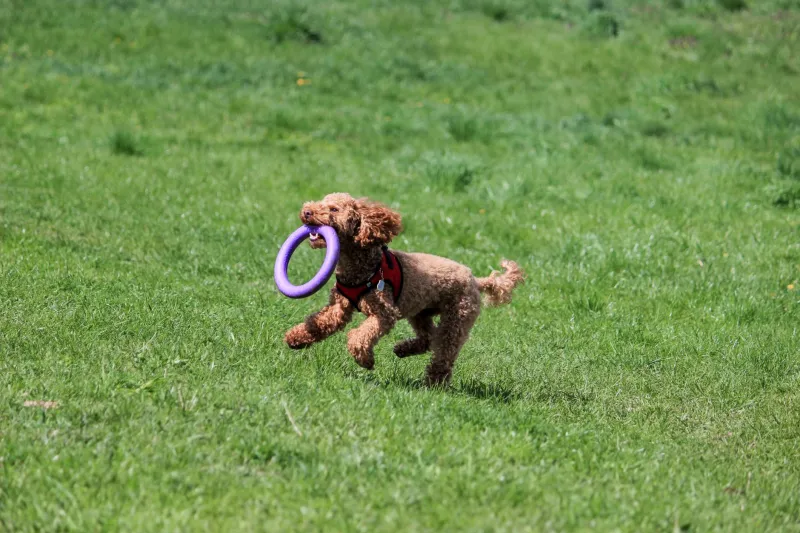
Rope toys, tug rings, braided pulls — if your dog lights up the second you grab one of these, you've got a dog who craves connection through play. Tug is inherently social. It requires you. And that's kind of the whole point for these dogs.
Dogs who love tug tend to be confident, engaged, and often pretty handler-focused. They want to play with you, not just near you. Breeds like Labs, goldens, and a lot of herding dogs fall into this category, but really any dog with a strong bond to their person can develop a deep love for tug.
Here's the good news: tug is one of the best training tools you've got. It builds drive, reinforces your relationship, and gives high-energy dogs a healthy outlet for all that enthusiasm. If your dog is a tug fanatic, lean into it. Use it as a reward during training. Play a round before you need them to settle down. It works.
And no, letting your dog win at tug doesn't make them dominant. That's an old myth. It actually makes tug more fun for them, which means they stay engaged longer.
The Plush Toy Nurturers
Some dogs don't want to destroy their toys at all. They carry them around. They sleep with them. They bring them to greet you at the door like a little gift. These are the plush toy nurturers, and they are genuinely one of the sweetest things in dog ownership.
This behavior tends to show up in breeds that were historically used for retrieving or companionship — goldens and Labs again, but also spaniels, and a lot of small companion breeds. The instinct to carry something gently in their mouth is deep in their DNA. For some dogs, a plush toy becomes a comfort object, especially in times of stress or transition.
If your dog is a nurturer, they're likely sensitive, socially attuned, and emotionally in tune with the people around them. They may not need a ton of high-octane stimulation — what they need is connection, routine, and a sense of security. Enrichment for these dogs looks less like obstacle courses and more like calm sniff walks, gentle training sessions, and yes, a steady supply of plush toys they can actually keep intact.
The Destroyer
On the opposite end of the spectrum: the dog who cannot rest until every toy has been fully dismembered. Stuffing everywhere. Squeaker extracted. Limbs separated from body. Mission complete.
This isn't necessarily a behavior problem — it's often just a dog with strong predatory instincts and a need to complete the sequence. In the wild, that sequence ends with the prey. For your dog, it ends with the squeaker. They're not being destructive for the sake of it; they're being thorough.
Destroyers tend to be independent thinkers, often with terrier or hound in their background, and they usually need more mental stimulation than they're getting. A bored destroyer is a dog who will find other things to take apart — shoes, couch cushions, your sanity.
For these dogs, look for toys specifically designed to be taken apart and reassembled — there are some great options built exactly for this. Puzzle toys with multiple compartments, snuffle mats, and frozen Kongs also hit that same satisfying "working for it" instinct without sacrificing your furniture.
When Preferences Shift — Pay Attention
Here's something that doesn't get talked about enough: if your dog's toy preferences suddenly change, that's worth noticing.
A dog who used to love tug and now shows no interest might be dealing with joint pain or low energy from an underlying health issue. A dog who suddenly becomes obsessive about a comfort toy might be experiencing anxiety. A dog who stops engaging with toys altogether is often telling you something important about how they're feeling.
Toy play is one of the clearest windows into your dog's emotional and physical state. Changes in play behavior are worth a conversation with your vet, especially if they come alongside other changes in appetite, sleep, or general demeanor.
Using This to Actually Help Your Dog
Knowing your dog's toy personality isn't just a fun party trick — it's genuinely useful. It helps you stop wasting money on toys they'll ignore and start investing in enrichment that actually lands.
It also helps you meet them where they are. A high-prey-drive dog who only gets leisurely leash walks and a plush toy collection is going to find other ways to burn that energy. A sensitive nurturer who gets pushed into rough, rowdy play is going to shut down. When you understand what your dog's play style is telling you, you can build a life that actually fits who they are.
And honestly? Watching your dog go absolutely feral for their favorite toy — whatever it is — is one of the great joys of having a dog. Let them have their thing. It's telling you everything you need to know.